


Moving from NYC to Boston
GET A FREE ESTIMATE
Average rating:
4.9/5
Based upon383customer surveys

GET A FREE ESTIMATE
New York to Boston is one of the shortest interstate moves in the Northeast – roughly 215 miles, four hours of highway, one straight run up I-95. Which is exactly why it gets underestimated. The drive is the easy part. The hard part is that you are moving out of one of the most access-restricted cities in America and into another one.
Boston has narrow colonial streets, permit-controlled curbs, low bridges that eat rental trucks, and a lease calendar that turns one day in September into citywide gridlock. New York has elevator reservations, certificates of insurance, and loading zones measured in minutes. A long-distance move between the two is entirely manageable – but only when both ends are planned in advance rather than improvised on the day.


Client fills out a detailed form with moving requirements.

Receive personalized offers tailored to your needs and budget.

On moving day, our team arrives to efficiently handle the move with care.
The NYC-to-Boston move is rarely about escaping the city. Most people making it are moving toward something specific.
Career gravity. Boston and Cambridge concentrate biotech, hospital systems, higher education, and venture-backed research in a way no other metro does. Kendall Square and the Longwood Medical Area pull people out of New York every single hiring cycle. If your field is life sciences, medicine, or academia, the opportunity density in Boston is simply higher.
A city you can cross on foot. Boston is compact in a way New York never is. Many residents walk to work, walk to dinner, and walk home. After years of 45-minute subway commutes, that compression is the thing people mention first.
Housing that trades quantity for quality. Be honest with yourself here: Boston is expensive. It is not a cost-of-living escape. What it usually is, is more square footage and more light for a similar number, plus a real chance at a brownstone floor-through or a two-bedroom with a working fireplace instead of a shoebox with an air shaft view.
Access to New England. The Cape, the Berkshires, coastal Maine, and New Hampshire’s mountains are all realistic weekend trips rather than expeditions. Many people moving north are buying back their weekends.
You keep New York. Amtrak and the shuttle put Manhattan within a few hours. This is not a move that severs your network – it relocates it.
Understanding the sequence removes most of the stress. Here is what a professional NYC-to-Boston move actually involves.
It is legally an interstate move. Crossing the New York–Massachusetts line puts your shipment under federal jurisdiction, regardless of the short distance. That means your mover needs active FMCSA operating authority and a valid USDOT number, and you are entitled to a written estimate and a bill of lading. Lifestyle Moving operates under USDOT 3652616 / MC 1259586. You can verify any mover’s authority free of charge on the FMCSA’s Protect Your Move site.
Certificates of insurance at both ends. Your New York building will want a COI before the crew is allowed near the freight elevator. So will most Boston high-rises, Seaport towers, and managed brownstone conversions. Send us both management contacts as early as possible – COIs are routine paperwork, but they are not instant.
Elevator reservations set your clock. New York buildings typically restrict moves to weekday windows, often 9am–4pm. Boston buildings frequently do the same. Two buildings, two calendars, one date that works for both – this is the single most common reason a move date slips, and the reason we start coordination weeks out.
Boston street occupancy permits. This is the step New Yorkers do not expect. Boston lets you reserve curb space for the truck, which is often the difference between a 40-foot carry and a 400-foot carry. A standard permit holds roughly two parking spaces from 7am to 5pm for one day, and the official “No Parking” signs must be posted at least 48 hours before the reservation starts. Online applications must be filed at least 15 days ahead and no more than eight weeks out. Details and the application live on Boston.gov. Cambridge and Somerville run their own separate permit systems – if you are landing there, that is a different application.
Truck sizing and the low-bridge problem. Storrow Drive and Memorial Drive have clearance limits low enough that trucks hit the overpasses several times a year. Locals call it “getting Storrowed.” Professional crews route around it automatically. It is also why Beacon Hill, the North End, and parts of the South End sometimes require a smaller shuttle truck to reach the door.
Delivery timing. Most NYC-to-Boston shipments are delivered on a one to three day window depending on size and whether your truck is dedicated or consolidated with other households heading north.
We quote the window we can actually hit, not the one that sounds best on the phone.
Pricing on this route is driven by volume and access, not mileage. Two identical two-bedroom apartments can differ by a thousand dollars if one is a fourth-floor walk-up in the East Village and the other is a doorman building with a service entrance. Here is the realistic range:
Typical Moving Costs from NYC to Boston
| Home Size | Typical Cost Range | Delivery Timeline |
|---|---|---|
| Studio / 1-Bedroom | $1,000–$2,400 | Same-day to next-day |
| 2-Bedroom | $1,600–$4,600 | 1–2 days |
| 3-Bedroom+ / Small House | $3,000–$6,500+ | 2–3 days |
What moves you within those ranges:
Want a real number instead of a range? Get a quick,transparent quote*→
No surprises, no hidden fees, just clarity from the start.*
Short interstate routes reward preparation more than they reward horsepower. The work happens at the curb, not on the highway.
Two permit cultures, one move. New York is about elevator windows, COIs, and negotiating with a super. Boston is about street occupancy permits, signage posted 48 hours out, and knowing which neighborhoods need a shuttle. A crew that only knows one side of that will lose you hours on the other.
Departure timing is a real variable. Leaving Manhattan at the wrong hour can cost you two hours before you have cleared the Bronx. Arriving in Boston at the wrong hour can put you into the Southeast Expressway at its worst. Load times get planned around both.
Right-sized equipment. The goal on this route is a single trip. A truck too small means two runs and double the cost. A truck too large cannot physically reach a Beacon Hill address. Matching vehicle to route is a planning decision made before moving day, not a discovery made on it.
Load discipline for a short haul. A 215-mile drive still includes highway vibration, tunnel grades, and the Zakim Bridge. Everything gets padded, strapped, and blocked as though it were going cross-country – because the damage risk is in the loading, not the mileage.
The most beautiful buildings and the hardest access in the city. Narrow one-way streets, brownstone stoops, tight interior staircases, and almost no legal curb space without a permit. Expect a shuttle truck on parts of Beacon Hill. Plan the permit early – these blocks fill fast.
Brownstone floor-throughs in the South End, newer construction and converted triple-deckers in Southie. Permits are essential in both. South Boston has better street width but heavy resident-only parking, which makes a reserved space more valuable, not less.
The most New York-like move on this list: high-rises, loading docks, freight elevators, COI requirements, and scheduled move windows. If you are coming from a Manhattan doorman building, this will feel familiar. Reserve the elevator as soon as your lease is signed.
The default landing spot for anyone joining a lab, a hospital, or a university. Important detail: Cambridge and Somerville issue their own moving permits – a Boston permit does not cover you across the river. Streets around Central and Porter squares are tight, and triple-decker walk-ups are common.
Easier access, driveways, more volume per household. These are typically family moves with larger inventories, so plan for a longer load day and a bigger truck rather than difficult parking.
Boston’s lease calendar is unlike anywhere else in the country. An enormous share of the city’s leases begin on September 1, driven by the academic year. The result is one day of near-total gridlock – trucks double-parked on every block, permits exhausted weeks ahead, movers fully booked, and abandoned furniture stacked on curbs across Allston.
If you can avoid moving on or near September 1, do. If you cannot, book far earlier than feels necessary and file the permit at the earliest date the city allows. Practical guidance for this route:
Four hours of driving. Two cities that both regulate the curb. One date that has to satisfy a New York building manager, a Boston permit office, and a lease start. That is the actual shape of this move – and it is completely solvable with a plan.
At Lifestyle Moving, we handle NYC-to-Boston relocations as fully licensed interstate moves: COIs at both ends, permit guidance for Boston and Cambridge, right-sized trucks for narrow streets, and written estimates with no moving-day surprises. Whether you are heading to a Seaport high-rise or a Somerville triple-decker, we coordinate the parts that make short interstate moves go sideways.
Plan your NYC-to-Boston move today – get a realistic timeline, a transparent quote, and a crew that knows both ends of the route.
Talk to a Lifestyle Moving consultant about your dates and building requirements.
Minimize downtime with coordinated elevator and COI scheduling, careful furniture disassembly and reassembly, protected hallways and floors, and a custom moving plan built for your building. Dedicated NYC move coordinator from quote to move-in.


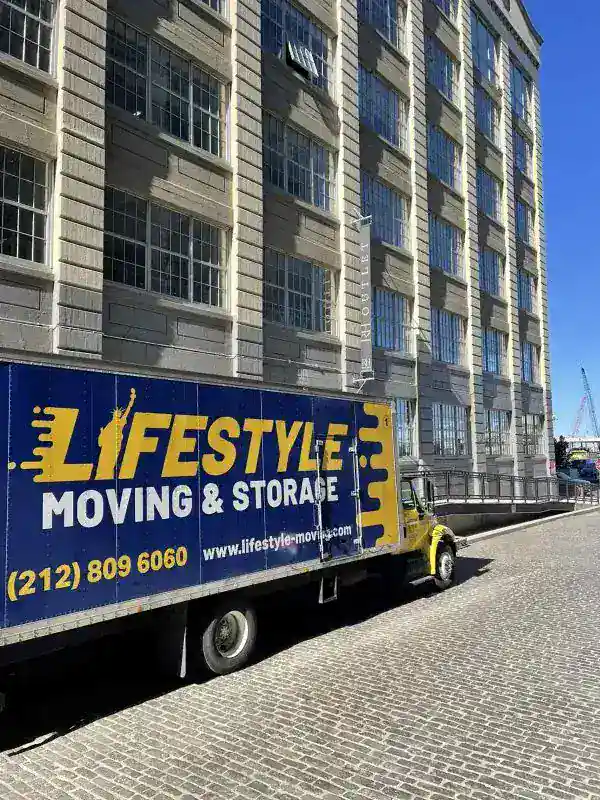

Our licensed crews handle the stairs, elevators, and heavy lifting so your move to your next place feels less like a struggle and more like a fresh start.


