




How to Pack Books for Moving
 Lifestyle Moving & Storage
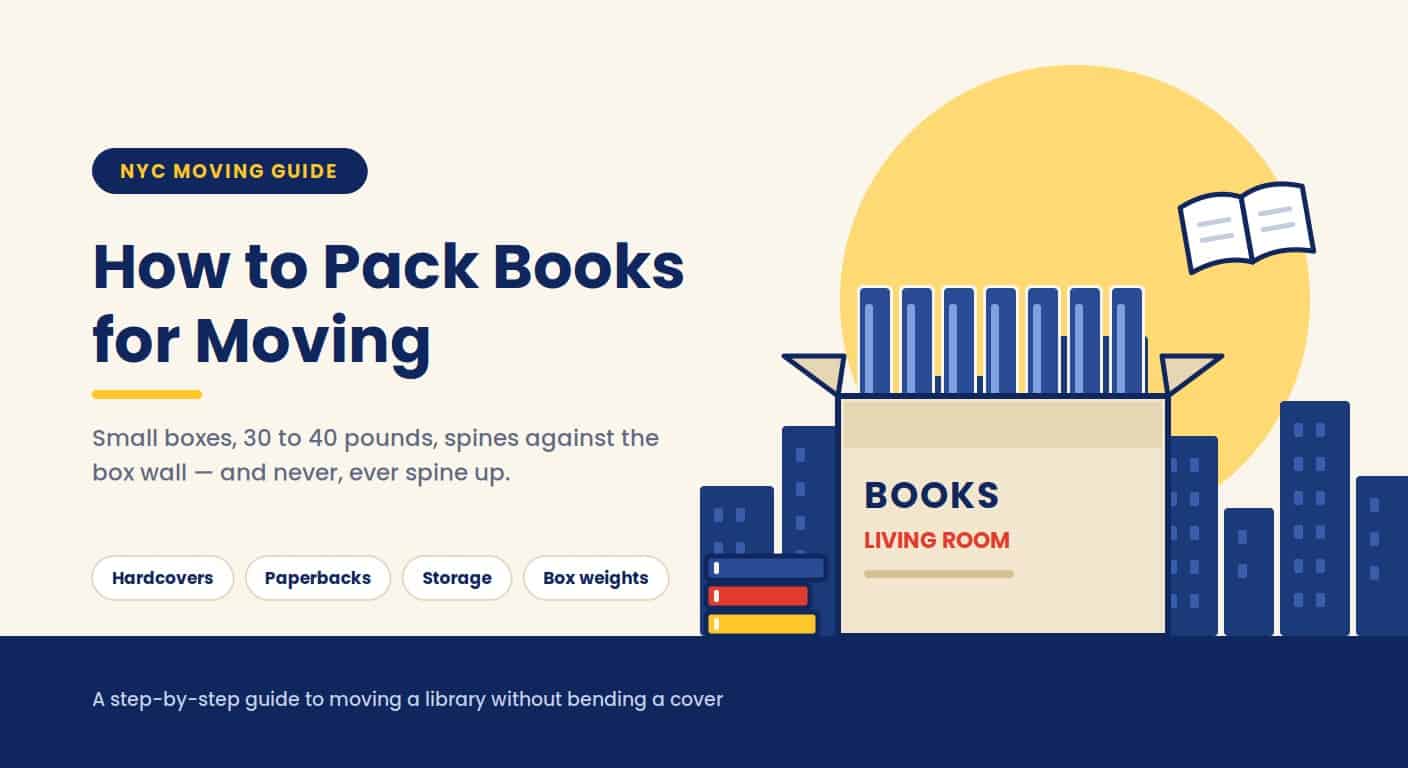
Pack books in small boxes, keep each box under 40 pounds, stand hardcovers upright with the spine against the box wall, lay oversized books flat, and fill every gap so nothing shifts. That is the whole method. Everything below is the detail that keeps covers straight, bindings intact, and boxes from blowing out on a fourth-floor walk-up.
Books are the single densest thing in most NYC apartments. A full bookcase that looks harmless can put 200 pounds in a corner of your living room. Pack them like they are heavy and everything else about the move gets easier.
What You Need Before You Start
Keep it simple. You need:
- Small boxes, roughly 16 x 12 x 12 inches (often sold as book boxes)
- Packing tape, enough to double-seal every bottom
- Packing paper or clean newsprint for lining and gap filling
- Acid-free tissue or paper for anything rare, leather, or signed
- Flat cardboard sheets for comics, magazines, and yearbooks
- A marker for labeling
- Plastic bins or bin liners if the books are going into storage
If you are also packing framed art or loose paper goods, picture frame boxes and storage tubs are worth picking up on the same trip.
Skip the free supermarket boxes for books. They are usually single-wall, often damp, and the bottom is the first thing to go. If you are reusing boxes, press on the base seam. Any give means it goes in the recycling, not on the truck.
Step-by-Step: How to Pack Books for a Move
- Sort before you pack. Every book you pack is a book someone carries down your stairs. Go shelf by shelf and split into keep, donate, and recycle. In NYC you have easy options: your local library branch, a thrift shop, a used bookstore that buys, or a clean stoop giveaway on a dry weekend. If you are working through a full moving checklist, this is the step to do first, because it changes how many boxes you need.
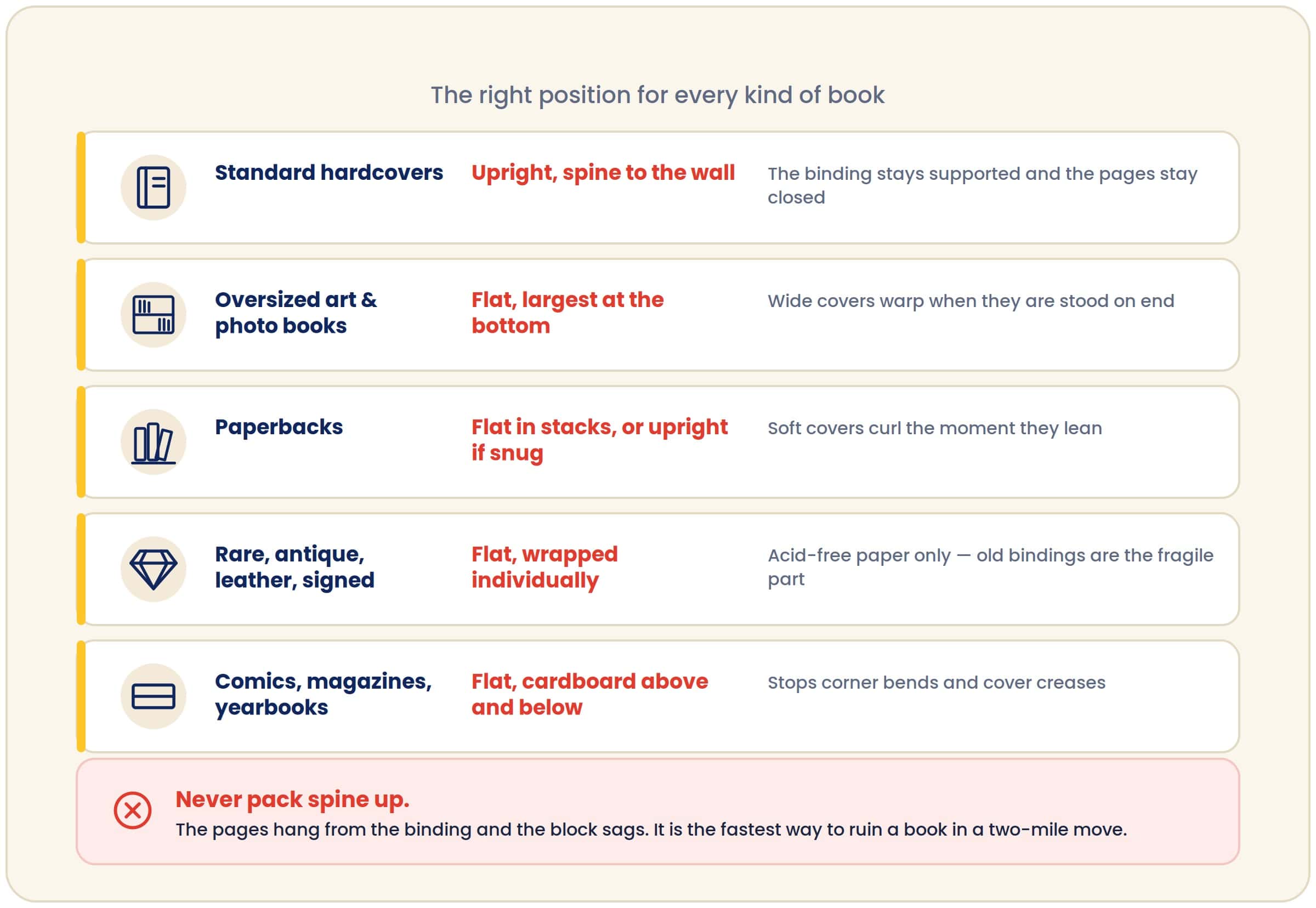
- Group by size, not by subject. Paperbacks with paperbacks. Hardcovers with hardcovers. Oversized art and photo books on their own. Same-size books pack tight with almost no gaps, and tight packing is what stops damage in transit.
- Double-tape the bottom. One strip along the center seam, then two more across it. If the box is used, add a third. This takes ten seconds and prevents the most common book packing failure there is.
- Line the box. A layer or two of packing paper on the bottom adds cushion and blocks dust and moisture.
- Load heaviest first. Big hardcovers on the bottom, mid-weight above them, paperbacks on top. The box stays balanced and nothing crushes anything.
- Fill the gaps. Crumpled paper down the sides and across the top. If you can shake the closed box and hear movement, it is not finished. Movement is what bends covers.
- Seal, label, and note the room. Write BOOKS and the destination room on the top and one side. Movers stack heavy boxes low, and a labeled box gets handled correctly instead of guessed at.
How to Position Books in the Box
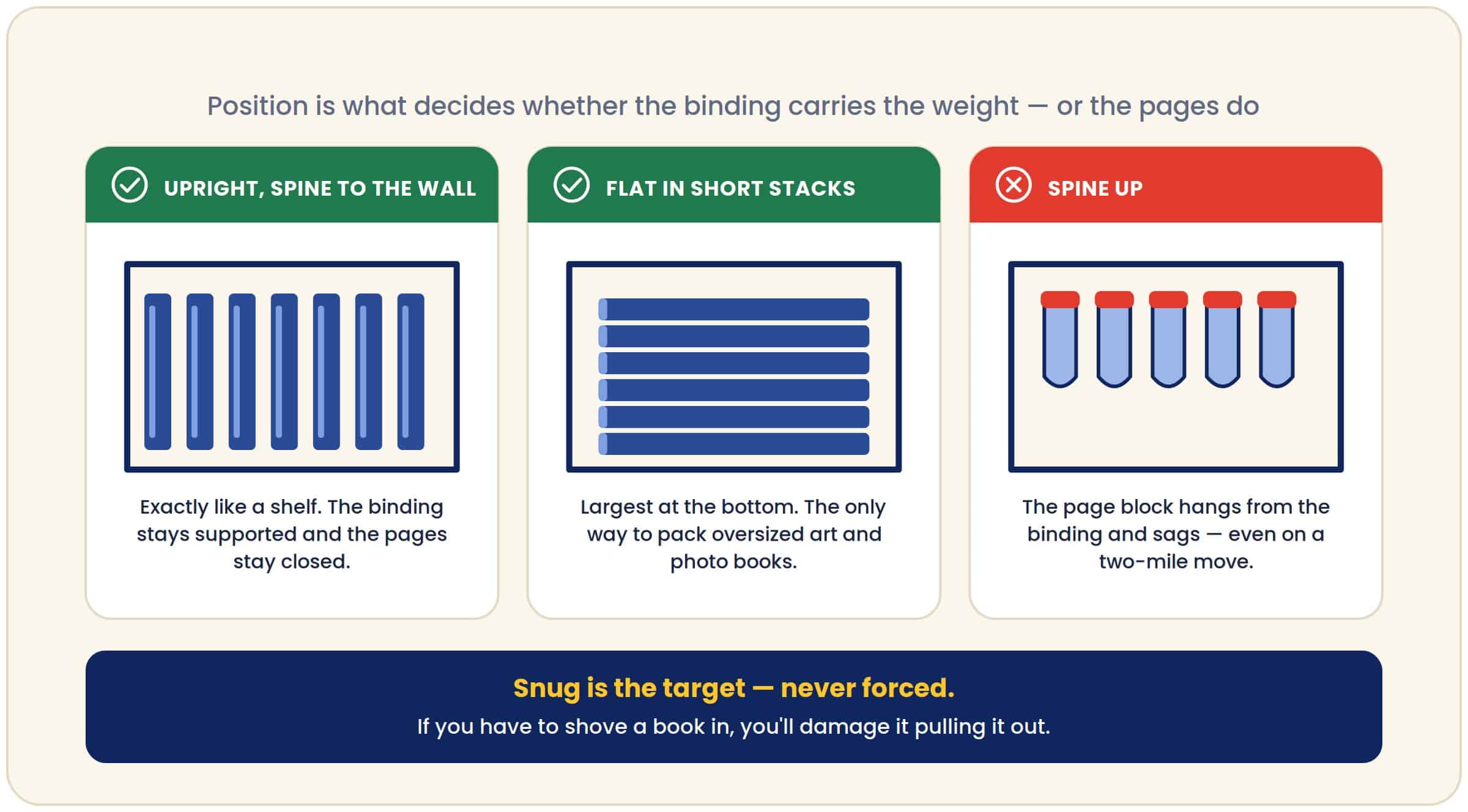
Position matters more than most people expect, because it decides whether the binding carries the weight or the pages do.
Two rules apply to everything:
Never pack spine up. Pages hang from the binding and the block sags. This is the fastest way to ruin a book in a two-mile move.
Do not force books in. Snug is the target. If you have to shove it in, you will damage it pulling it out.
Harvard Library’s guidelines for packing books into boxes for commercial shipping recommend packing flat in one or two stacks, spine to spine, and capping boxes at 40 pounds, with 25 pounds as the ceiling for fragile or special collections. The Library of Congress gives similar advice for home collections: flat with the heaviest volumes at the bottom, or vertical with the spine down, weight centered, and empty space padded out. That is a good standard to borrow for anything you actually care about.
How Much Should a Box of Books Weigh?
Between 30 and 40 pounds. Stop at the weight, not at the empty space.
That is the number that keeps backs healthy and box bottoms attached. Ten manageable boxes move faster than five boxes nobody wants to pick up, especially in a building with stairs.
A useful planning rule: one small box per foot and a half of packed shelf. Six linear feet of packed hardcovers usually lands somewhere around four boxes. A typical five-shelf bookcase holds closer to 12 to 15 linear feet, so plan on eight to ten boxes for a full one.
If a box hits the weight limit while it is still half empty, top it off with something light. Linens, throw pillows, or a folded blanket work and add cushion at the same time.
Two NYC Details That Change How You Pack
Stairs. In a walk-up, weight is the whole story. Two people passing 30-pound boxes down four flights is routine. Passing 55-pound boxes down four flights is how people get hurt and how boxes get dropped. If you live above the second floor with no elevator, pack toward 30 pounds and not a pound more. This is the norm across a lot of the housing stock our Brooklyn movers work in.
Elevator windows. Buildings with freight elevators give you a booked time slot, usually two or three hours. Small, uniform, clearly labeled boxes load fast and stack cleanly on a dolly. Odd-sized, overweight boxes slow the whole load down and eat the window you reserved. Your building will also want a Certificate of Insurance on file before anyone touches the elevator, so handle that early.
If you would rather hand the whole thing off, our packing services cover full or partial packing with materials included.
Packing Books for Storage
Storage changes two things: moisture and time.
- Use plastic bins or line cardboard boxes with a plastic bag, since cardboard pulls moisture out of the air over months.
- Add a silica gel packet to any box holding rare or antique books.
- Wrap in acid-free paper, never newspaper. Newsprint ink transfers onto pages and covers.
- Keep boxes off concrete floors, on a pallet or shelf.
- Choose climate-controlled space. New York summers are humid, and humidity is what warps covers and grows mildew.
Books tolerate a few weeks in a hallway. They do not tolerate six months in an uninsulated unit. If your lease dates leave you with a gap, climate-controlled storage is the right call for a collection you plan to keep.
Common Mistakes to Avoid
- Using large boxes. A large box of books can exceed 70 pounds. Nobody is lifting that safely, including your movers.
- Packing spine up. Damages bindings on a short move, not just a long one.
- Leaving air in the box. Empty space becomes movement, and movement becomes bent covers.
- Wrapping books in newspaper. Fine for dishes. Bad for pages.
- Stacking book boxes on light boxes. Books crush everything under them. Heavy goes on the bottom, in the box and in the truck.
- Loading boxes in the rain without cover. Wet cardboard fails without warning. Cover them or wait out the shower.
- Packing every book you own. Measure your new shelf space first. It is cheaper to donate than to move a box twice.
Get a Flat-Rate Quote for Your Book Move
Moving a real library across the five boroughs, or trying to fit one into a walk-up with a two-hour elevator window? Our NYC crews handle packing, protection, and storage on the same job. Get a flat-rate quote and tell us how many shelves you have.

EXPERT NYC MOVERS & STORAGE SOLUTIONS
Looking for the best place to get moving and storage solutions in NYC? Look no further than Lifestyle Moving & storage! We are the leading provider of moving and storage solutions in NYC, and we’re here to help make your move as pleasant as possible.
We are fully licensed and insured and offer a wide range of services to meet your moving and storage needs. We are a one-stop shop for moving and storage. Contact us today.
